The Betrayal of Death: Representations of Cain and His Doubles
DOI:
https://doi.org/10.34624/fb.v0i12.5266Keywords:
Cain, Byron, Mary Shelley, romanticism, George Bernard Shaw, SaramagoAbstract
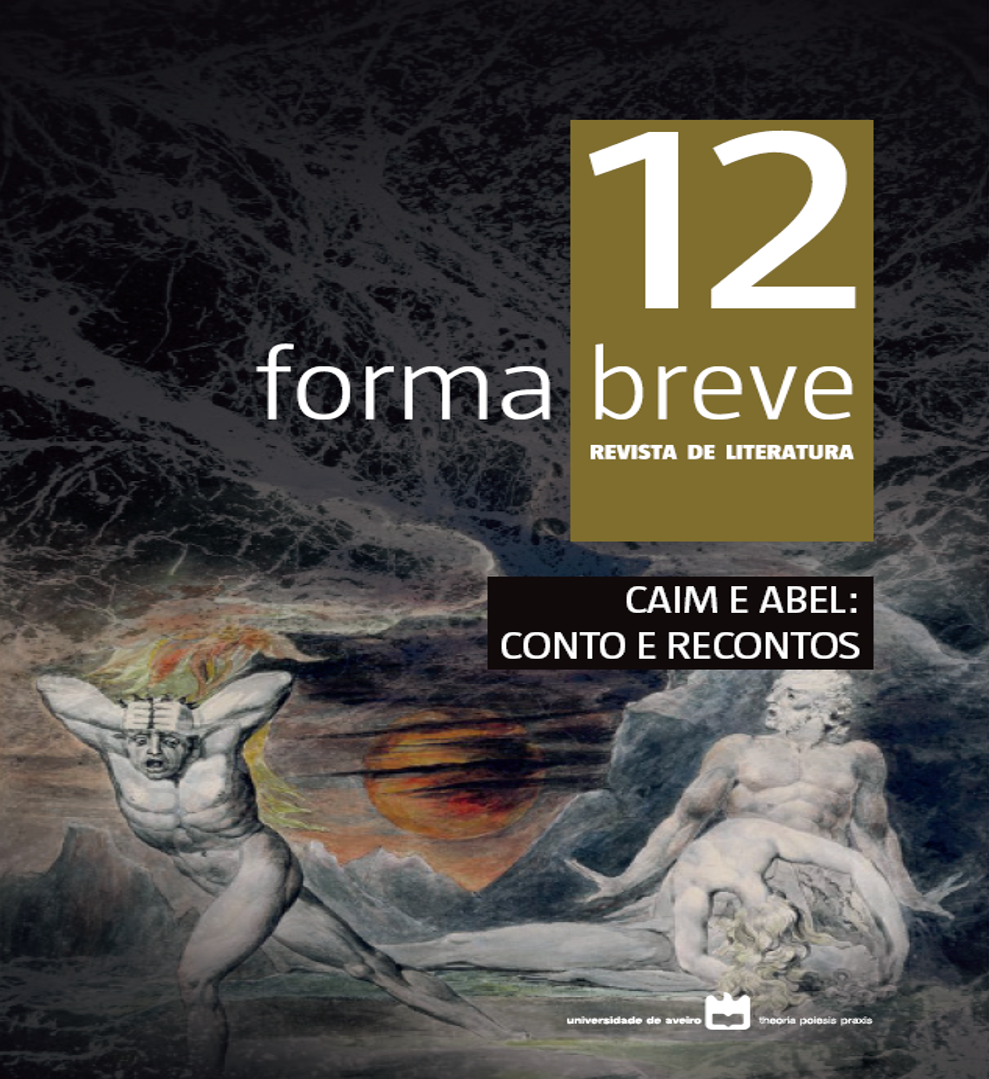
This essay analyses a number of characters that are literary descendents of Cain, as well as two topics inextricably connected with it: immortality and the Double. In this context Mary Shelley’s Frankenstein (1818; 1831) and Lord Byron’s Cain (1821), a play Shelley admired, are examined. In turn, both Frankenstein and Cain were deeply influenced by Milton’s Paradise Lost, which William Blake, who also thought highly of Byron’s Cain, profusely illustrated, including lithographs portraying Cain.
As a prototypical Romantic hero, Cain represents the wandering rebel, who defies God’s imposition of death on humanity, identifies with Lucifer and yearns for immortality. Cain’s similarities with Shelley’s Frankenstein and his Creature are numerous and telling, including the rebellion against their Creator, who eschews responsibility by abandoning them, as well as their positioning as Doubles. In related vein, Saramago’s Cain shares a number of characteristics with Byron’s and George Bernard Shaw’s Cain.
As creation myths, these narratives of rebellion against the tyranny of death, seen as an act of betrayal by an omnipotent, despotic God, are profoundly contemporary and topical, articulating the wish for a longer life that scientific advances promise to deliver in the not too distant future. Cain can thus be seen as a very modern character, articulating the ambitions of transhumanists and others who envisage life extension and the permanent removal of death.
Downloads
References